Minibus Dimensions, Seating & Weight Explained
Planning a group trip can be exciting, but the logistics can feel overwhelming. One of the first questions you’ll face is choosing the right transport. Whether you’re organising a school outing, a family holiday, or a corporate event, understanding minibus dimensions, seating, and weight is crucial. It affects everything from your driving licence requirements to where you can park.
This guide will explain everything you need to know about UK minibus hire. We’ll cover common seating layouts, vehicle sizes, and weight limits to help you make an informed choice. Minibuses typically range from 9 to 17 seats, and picking the correct one ensures your journey is comfortable, legal, and stress-free.
Common Seating Layouts (9–17 Seats)
A frequent point of confusion is how many seats a minibus has and whether the driver’s seat is included in the count. Let’s break down the most common minibus seating configurations.
How Many Seats in a Minibus?
When you hire a minibus, the advertised number of seats almost always includes the driver. So, a 16-seater vehicle has room for a driver and 15 passengers. This is a critical detail for trip planning to ensure you have enough space for everyone.
- 9-Seater Minibus: Often a popular choice for large families or small groups, a 9-seater vehicle is legally classed as a car if its Gross Vehicle Weight (GVW) is under 3.5 tonnes. This means it can typically be driven on a standard car licence (Category B). They offer more space than an MPV and are perfect for airport transfers or weekend trips.
- 12-Seater Minibus: Stepping up in size, 12-seaters provide a bit more room for small teams or groups with luggage. You will often find these used for corporate travel or by sports clubs. The answer to “does a 12 seater include the driver?” is yes, it seats a driver and 11 passengers.
- 14 & 15-Seater Minibuses: These mid-range options strike a great balance between capacity and manoeuvrability. They are a common choice for school runs, wedding guest transport, and tours.
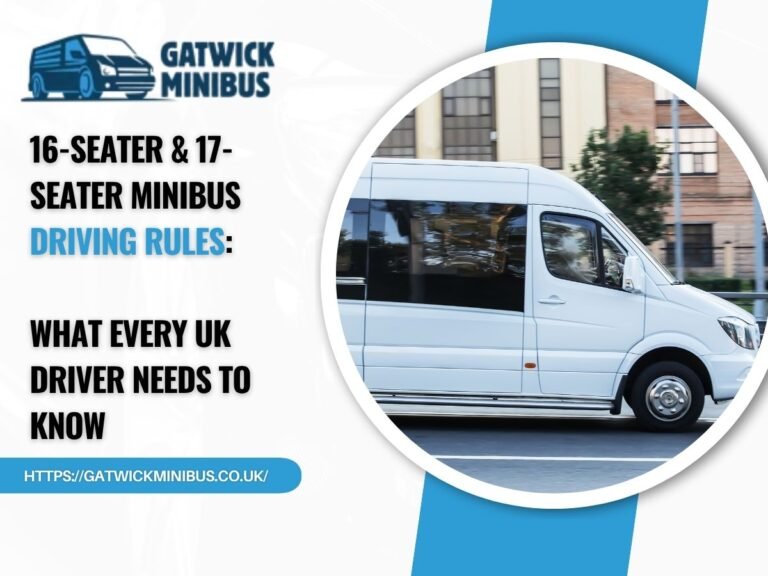
- 16 & 17-Seater Minibuses: The largest standard minibuses available. A 16-seater includes the driver, leaving 15 passenger seats. These vehicles are the workhorses of group travel, ideal for school sports teams, large event transport, and extensive tours. A 17-seater offers one extra spot for a passenger, which can make all the difference.
Is a 9-Seater Classed as a Minibus?
Technically, a vehicle with 9 to 16 passenger seats is classed as a minibus. However, a 9-seater vehicle (driver + 8 passengers) often falls into a different category for driving licence purposes, especially if it was first registered as a car. For hiring purposes, it functions as a “large car” or “small minibus,” offering great flexibility.
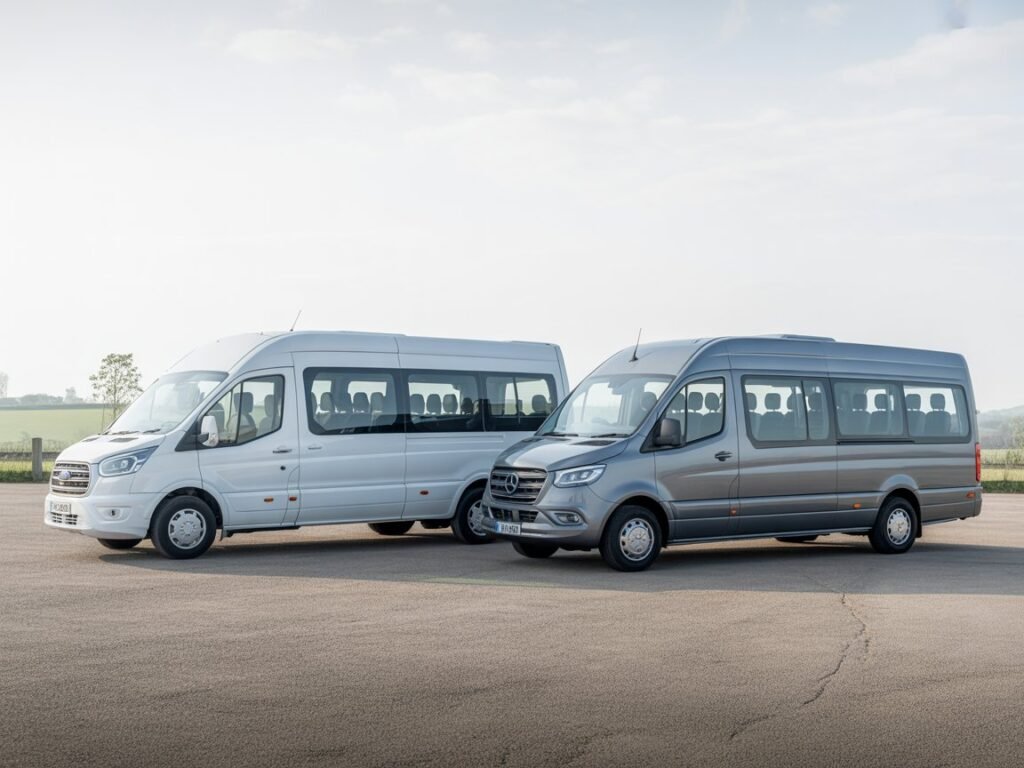
Dimensions: Length, Width & Height
Knowing the dimensions of a minibus is essential for practical reasons. Will it fit in the designated parking bay? Can it navigate narrow country lanes? How tall is it, and will it clear low bridges or car park height restrictions?
The average length of a minibus in the UK ranges from around 4.5 metres for a compact 9-seater to over 7 metres for a 17-seater model.
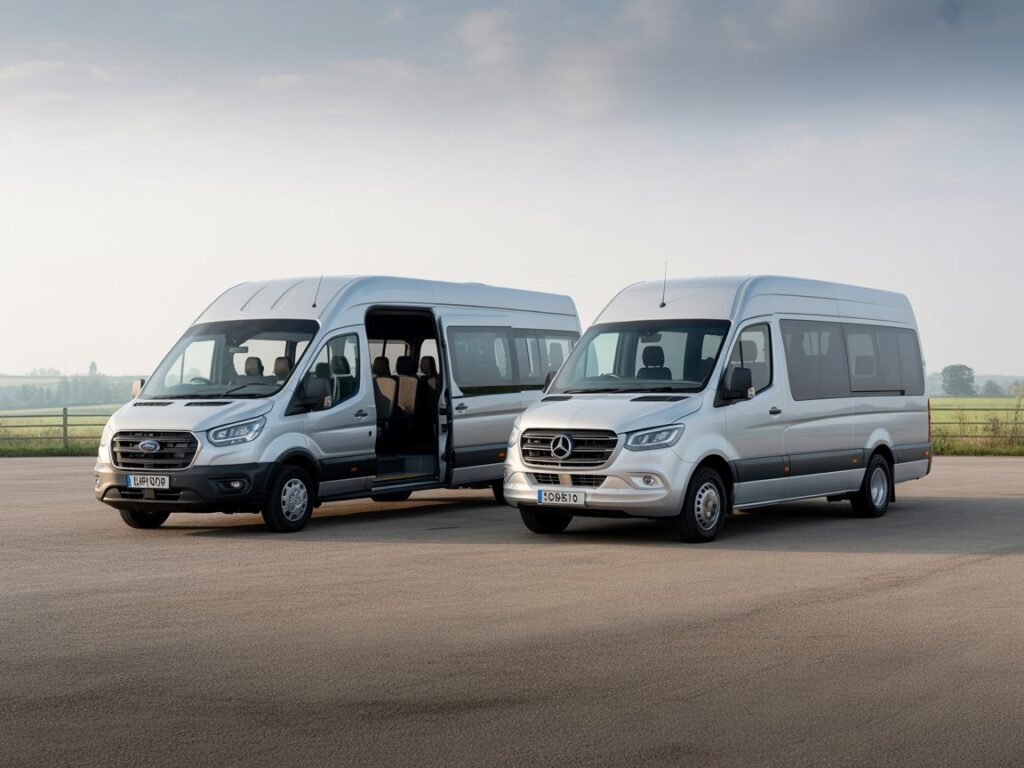
- Ford Transit Minibus: This is one of the most popular models on UK roads. A typical 17-seater Ford Transit is approximately 6.7 metres long, 2.4 metres wide (including mirrors), and about 2.8 metres high. Knowing how long a Ford Transit minibus is helps you plan routes and parking.
- Mercedes Sprinter Minibus: Known for its comfort and premium feel, the Mercedes Sprinter is another common choice. The long-wheelbase versions used for 17-seat conversions can be over 7 metres long. These Mercedes Sprinter minibus specs make it a spacious option, but one that requires a confident driver.
These measurements matter. A longer vehicle has a wider turning circle, making tight city corners more challenging. Height is a major factor for accessing multi-storey car parks, many of which have a 2-metre height limit. Always check your route for low bridges and other restrictions before setting off.
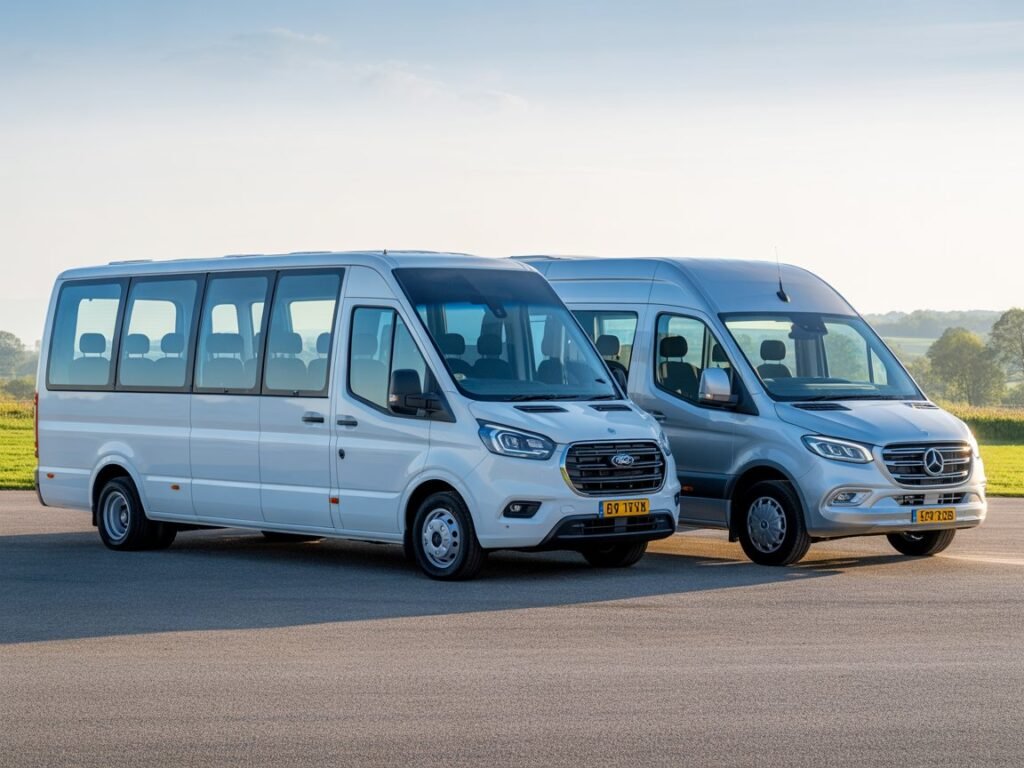
Weight & Payload Limits
A minibus’s weight is more than just a number; it’s a key factor in UK road law and driver licensing. The most important term to understand here is Gross Vehicle Weight (GVW).
GVW (Gross Vehicle Weight) is the maximum legal weight of the vehicle, including the chassis, fuel, driver, passengers, and all their luggage. It is also sometimes referred to as the ‘laden weight’.
This figure determines the driving licence category required:
- Vehicles up to 3.5 tonnes (3,500kg) GVW: You can usually drive a minibus of this weight with a standard Category B car licence, provided you meet certain conditions (e.g., you are over 21, have held your licence for at least two years, and are not driving for hire or reward).
- Vehicles between 3.5 and 7.5 tonnes (3,500kg – 7,500kg) GVW: To drive a minibus in this weight category, you need a Category D1 licence. Most 12- to 17-seater minibuses fall into this bracket once passengers and luggage are on board.
How much does a minibus weigh? An empty 16-seater minibus weighs around 2.5 tonnes. However, once you add 15 passengers and their luggage, the GVW can easily exceed the 3.5-tonne threshold. The vehicle’s payload capacity—the total weight of passengers and luggage it can carry—is designed to keep it within its legal GVW.
Accessible minibus dimensions and weight can also differ. Vehicles fitted with wheelchair lifts and other accessibility equipment may have a higher unladen weight and can be operated up to 4.25 tonnes GVW by certain non-commercial organisations under a specific permit.
When you hire a vehicle from a professional company like Gatwick Minibus, it comes with a qualified, D1-licensed driver, so you don’t have to worry about these complex regulations.
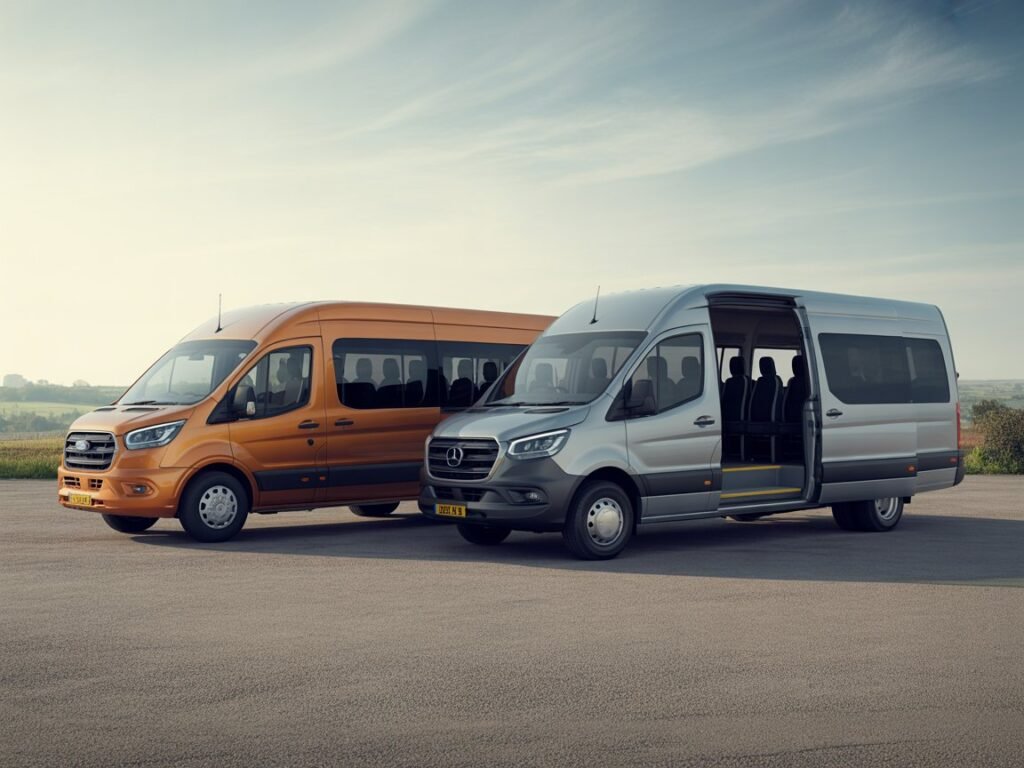
Popular Minibus Models: Ford vs. Mercedes
While many manufacturers produce minibuses, the Ford Transit and Mercedes Sprinter dominate the UK market. Both are excellent choices, but they offer slightly different experiences.
Ford Transit Minibus
- Reliability: The Transit is legendary for its reliability and durability. It’s a true workhorse, built to handle high mileage and demanding schedules.
- Size & Specs: With excellent Ford Transit dimensions, it offers a great balance of passenger space and road presence. Various configurations are available, making it a versatile choice for different minibus hire seating options.
- Running Costs: Generally, parts and servicing are more affordable than for premium German brands, making it a cost-effective option for operators.
- Features: Modern Transits come with advanced safety features, efficient diesel engines, and a surprising amount of comfort for passengers. Boot space can be limited on 17-seaters, so a trailer may be needed for trips with lots of luggage.
Mercedes-Benz Sprinter Minibus
- Comfort: The Sprinter is often seen as the more luxurious option. It’s known for a smoother ride, higher-quality interior finishes, and superior passenger comfort.
- Size & Specs: The Mercedes Sprinter minibus specs often boast more interior headroom and a more spacious feel. Its long-wheelbase models provide generous legroom.
- Brand Image: The Mercedes badge carries a premium feel, making it a popular choice for corporate clients, executive travel, and high-end tours.
- Features: Sprinters are packed with technology and safety systems. They also offer excellent accessible minibus dimensions and conversion options. Like the Transit, luggage space in a fully loaded 17-seater can be tight.
Summary & Getting Your Quote
Choosing the right minibus size depends on how many passengers you’re carrying and your driving licence type. Whether you need a compact 9-seater or a full 17-seater, Gatwick Minibus Hire offers fully insured, comfortable, and legally compliant vehicles for all group sizes.