How to Get a Minibus Licence in the UK: A Step-by-Step Guide
Thinking about driving a minibus for a school, a community group, or even as a new career path? It’s a great skill to have, opening up opportunities for group travel and work. However, in the UK, you can’t just jump into the driver’s seat of a minibus with a standard car licence. You’ll likely need a specific entitlement known as a Category D1 licence.
So, what exactly is a D1 licence? It allows you to drive vehicles with:
- 9 to 16 passenger seats
- A maximum length of 8 metres
- A trailer up to 750kg
Knowing how to get a minibus licence can seem complicated with all the forms, tests, and rules. But don’t worry. We’ve broken down the entire process into simple, manageable steps. This guide will walk you through everything you need to know about your D1 licence application, from the initial paperwork to passing your final test.
A Quick Overview: Your Path to a Minibus Licence
- Check You’re Eligible and Apply: Get your provisional D1 entitlement.
- Pass a Medical Exam: Prove you are medically fit to drive.
- Ace the Theory Tests: Pass the multiple-choice and hazard perception tests.
- Succeed in the Practical Test: Demonstrate your driving skills.
- Complete CPC Training (if needed): A requirement for professional drivers.
Let’s dive into the details of each step.
Step 1: Apply for Your D1 Provisional Licence
Before you can even think about minibus driver training, you need the right provisional licence. This shows you are legally allowed to start learning.
Who Can Apply?
To apply for a provisional D1 licence, you must:
- Be at least 18 years old.
- Already hold a full Category B (car) driving licence.
The Paperwork: D2 and D4 Forms
The first part of your minibus licence application involves two key forms from the DVLA:
- D2 Form: This is the main application form for a lorry, bus, or minibus licence. You’ll fill in your personal details and specify that you are applying for a Category D1 provisional licence.
- D4 Form: This is a medical report that must be completed by a doctor. We’ll cover this in more detail in the next step.
You can order these forms directly from the GOV.UK website. Once both forms are completed, send them along with your photo card driving licence to the DVLA. There is no fee for adding a provisional entitlement to your licence.
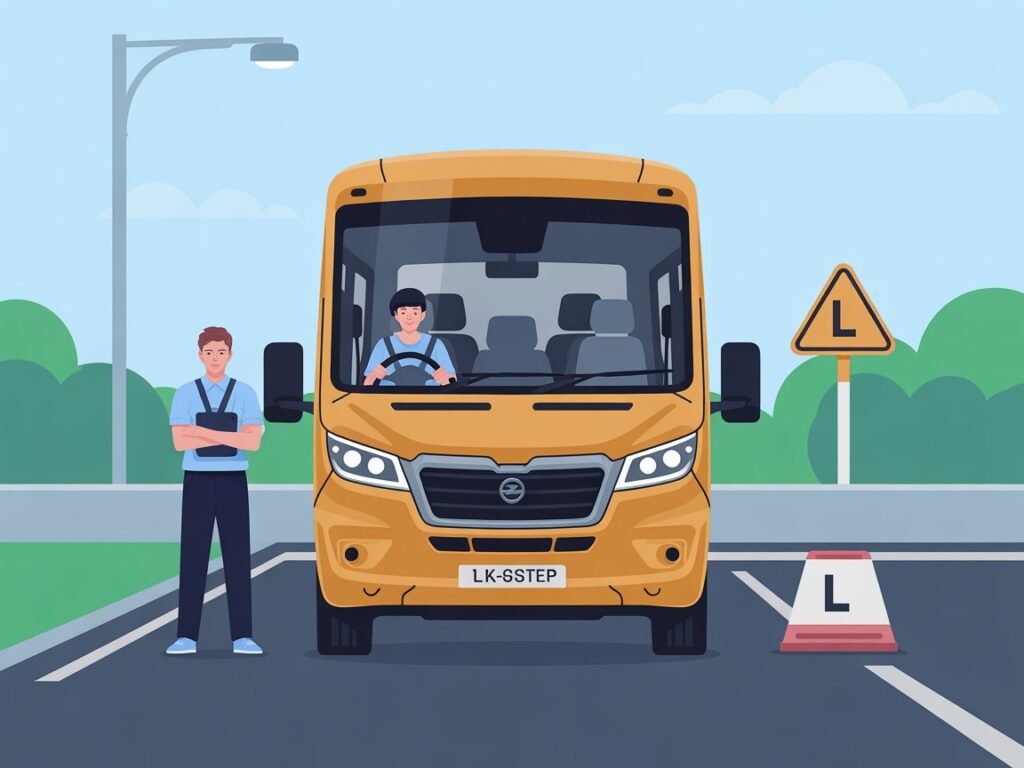
Step 2: The Medical Requirements for a D1 Licence
Driving passengers carries a huge responsibility, so the DVLA needs to ensure you are in good health. This is where the D4 form comes in. You must undergo a medical examination with a doctor, who will assess your fitness to drive.
What Does the Medical Exam Involve?
The doctor will check several aspects of your health, including:
- Eyesight: There are specific vision standards you must meet.
- Neurological Conditions: Any history of seizures, blackouts, or other conditions will be reviewed.
- Mental Health: The doctor will assess your mental state.
- Heart Conditions: Any existing cardiac issues will be considered.
- Diabetes: If you have diabetes, specific rules may apply.
- Sleep Disorders: Conditions like sleep apnoea must be declared.
You can go to your own GP, but they may charge a significant fee. Many private doctors specialise in driver medicals and often offer a faster, more affordable service. Once the doctor has signed your D4 form, it’s ready to be sent to the DVLA with your D2 application.
Step 3: Pass the Theory & Hazard Perception Tests
With your provisional D1 licence in hand, it’s time to hit the books. Just like when you learned to drive a car, you must pass a theory test. The minibus theory test is split into two parts, which you take on the same day.
Part 1: Multiple-Choice Questions
This section tests your knowledge of the Highway Code, traffic signs, and specific rules for driving larger vehicles. You will be asked 100 multiple-choice questions and need to score at least 85 out of 100 to pass.
Part 2: Hazard Perception
This test measures your ability to spot developing hazards on the road. You’ll watch 19 video clips and click the mouse as soon as you see a potential hazard emerge. The earlier you spot it, the more points you score. You need to score at least 67 out of 100 to pass this part.
How to Prepare: The best way to prepare is by using official DVSA resources, including books, apps, and online practice tests. These tools familiarise you with the format and types of questions you’ll face. You can book your theory tests online once you feel ready.
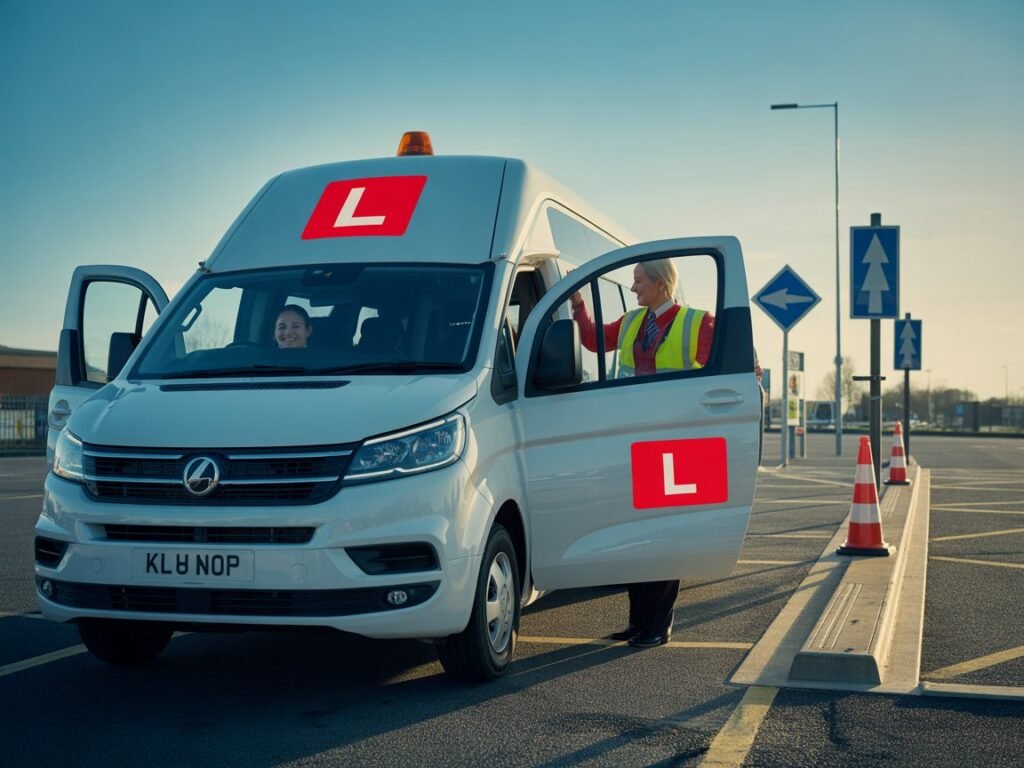
Step 4: Book and Pass the Practical Driving Test
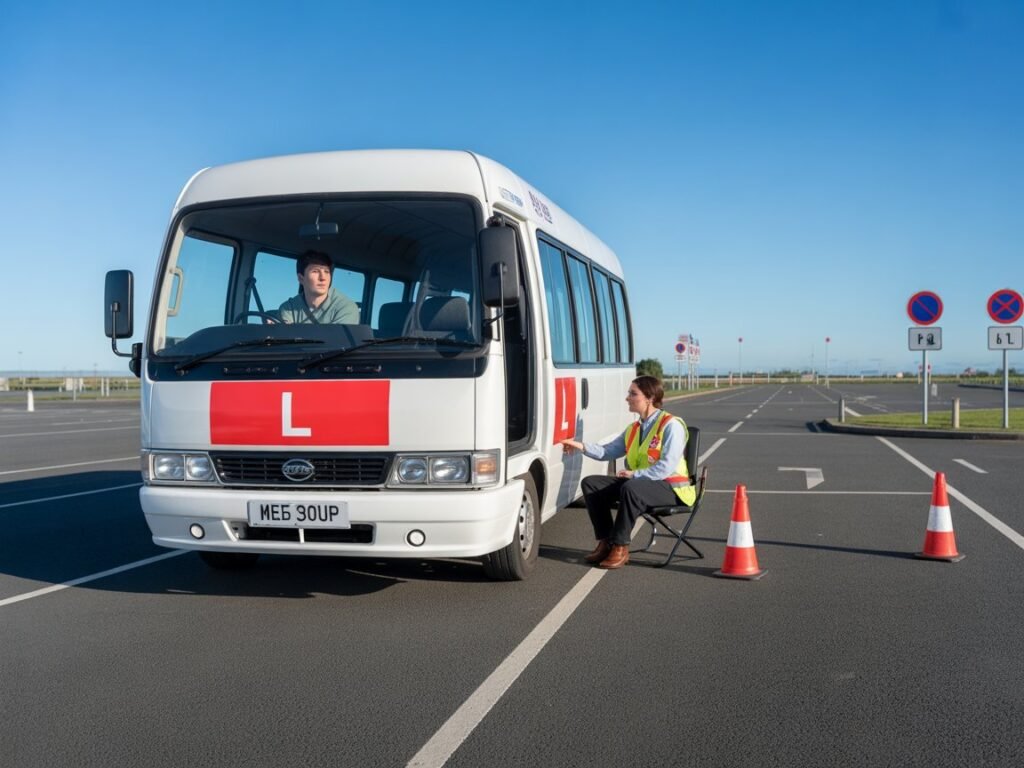
This is the final hurdle in your journey. The DVSA practical test for a D1 licence proves you can handle a minibus safely and competently. It is much more demanding than a standard car test.
The test lasts around 90 minutes and includes:
- Vehicle Safety Questions: Often called the “show me, tell me” questions, where you’ll demonstrate knowledge of vehicle safety checks.
- Reversing Manoeuvre: You will be required to complete a specific S-shaped reversing exercise into a bay.
- Road Driving: An examiner will assess your driving on various roads and in different traffic conditions. This portion includes about 10 minutes of independent driving, where you’ll follow traffic signs or a sat nav.
The examiner will be looking for a high standard of driving. Key areas of focus include mirror usage, signalling, road positioning, and your awareness of the vehicle’s size.
Step 5: CPC Training (If Driving Commercially)
Will you be driving the minibus for payment or as part of your job? If the answer is yes, you will also need to complete the Driver Certificate of Professional Competence (CPC) qualification.
- Initial CPC: For new professional drivers, this involves two extra tests: Case Studies (Module 2) and a Practical Demonstration (Module 4).
- Periodic CPC: To keep your CPC valid, you must complete 35 hours of training every five years.
If you are only driving the minibus for personal use, such as for a hobby, a volunteer group, or family trips without being paid, you generally do not need a CPC qualification.
Time, Cost & Documents Needed
Understanding the timeline and costs helps you plan your D1 licence application.
- Timeframe: The entire process typically takes between 6 and 12 weeks. This can vary depending on DVLA processing times, test availability, and how quickly you complete your minibus driver training.
- Costs: The total cost can range from £200 to over £1,000.
- Provisional Licence: Free
- Medical Exam: £50 – £100
- Theory Tests: £37
- Practical Test: £115
- Driver Training: This is the biggest variable. Lessons can cost £30-£50 per hour, and most people need 10-20 hours.
- Documents: You will need your full UK car driving licence, the D2 and D4 application forms, and your passport or another form of ID.
Tips to Help You Pass the D1 Test
Passing the D1 practical test requires skill and confidence. Here are a few tips to help you succeed:
- Get Professional Training: An experienced instructor is invaluable. They know the test routes and what examiners look for.
- Practice in a Similar Vehicle: Getting used to the size, weight, and turning circle of a minibus is crucial.
- Master Your Mirror Checks: With a larger vehicle, your mirrors are your best friends. Use them constantly to stay aware of your surroundings.
- Perfect the Reversing Manoeuvre: This is a common failure point. Practice it until it becomes second nature.
- Plan Your Routes: During independent driving, know how to read road signs and anticipate your turns well in advance.
Getting your D1 minibus licence opens up a world of travel and work opportunities. And if you’d rather leave the driving to professionals, Gatwick Minibus Hire offers safe, reliable minibuses with fully licensed drivers for any occasion.